

Every May, the island of Okinawa comes alive with the sounds of drums, cheers, and the splash of paddles slicing through the sea. It’s the season of Hari, also known as Haarii, Okinawa’s traditional dragon boat races.
But what is Hari exactly? Where does it come from? And how can you, as a visitor, enjoy this energetic local event? Let’s dive in!
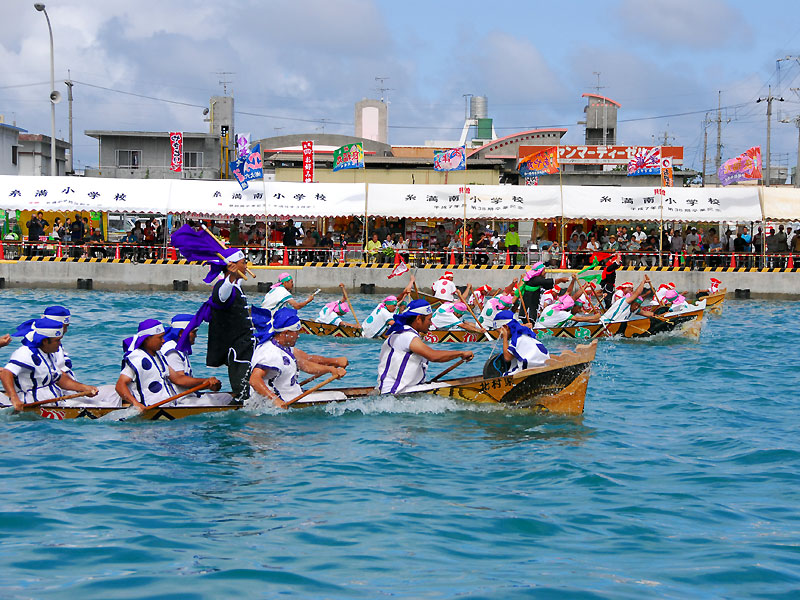
🏮 What is Hari (Haarii)?
Hari (or Haarii) is a traditional boat race held in Okinawa to pray for a good fishing harvest and the safety of those who work at sea. It’s deeply rooted in the culture of uminchu—a word in Okinawan dialect meaning “fisherman.”
The event involves teams paddling long, narrow boats known as sabani (traditional Okinawan fishing boats) or dragon boats in a race across the harbor. It’s not just a competition—it’s a celebration of gratitude to the sea.
📜 A Brief History of Hari
While Hari is now a beloved Okinawan tradition, its origins trace all the way back to ancient China, around 340 BC. According to legend, it began as a memorial for Qu Yuan, a Chinese poet and politician. After his tragic death, local people started racing dragon boats to honor his memory—this practice later spread throughout Asia.
Hari was introduced to Okinawa between 1392 and 1405, during the time when the islands were known as the Ryukyu Kingdom. Over time, the people of Okinawa blended the Chinese tradition with their own fishing culture, making Hari a unique local event.
🛶 Itoman Haarii: The Most Traditional Race
If you’re in Okinawa in late spring, the Itoman Haarii is the one you don’t want to miss.
📍 Location: Itoman Fishing Port (about 30–40 minutes south of Naha)
📅 Date: Held annually on the 4th day of the 5th month in the lunar calendar (usually June in the Western calendar)
👀 What to Expect:
- Teams from three traditional communities—Nishimura, Nakamura, and Miijima—compete in colorful outfits
- Paddlers show off their powerful technique using “eeku” paddles
- Women (often mothers of the paddlers) cheer with drums and dancing
- Fun events like the capsize race (Kunnukase) and even duck-catching contests for tourists!
It’s a lively, full-day festival filled with excitement, tradition, and community spirit.
🎆 Naha Haarii: The Biggest Dragon Boat Festival
While Itoman Haarii is more traditional, the Naha Haarii is the largest of its kind in Okinawa.
📍 Location: Naha New Port
📅 Date: May 3–5 (during Japan’s Golden Week holiday)
👥 Crowd: Around 200,000 visitors
🚢 The boats are large and elaborately decorated with dragon heads, unlike the smaller sabani boats in Itoman.
The Naha event includes music, fireworks, food stalls, and family-friendly activities. Perfect for first-time visitors!
🧭 Hari or Haarii? What’s the Difference?
Both terms refer to the same event. The spelling varies depending on the region:
- Hari / ハーリー is common in central and northern Okinawa
- Haarii / ハーレー is used in Itoman and some southern regions
You may also hear “Haari” or “Haarī” depending on the romanization system.
🌊 Tips for Visitors
- Arrive early for good viewing spots—especially at Itoman Haarii
- Bring sun protection, as Okinawa gets hot and sunny in May/June
- Don’t miss the food stalls—you’ll find local dishes like sata andagi (Okinawan donuts) and goya champuru (bitter melon stir-fry)
- At some events, tourists can participate in simple games—like catching rubber ducks for prizes!
- Be respectful—Hari is a spiritual and cultural event, not just a race
🐠 In Short…
Hari is more than just a boat race. It’s a celebration of the relationship between Okinawans and the sea, passed down through generations.
Whether you’re a history buff, culture lover, or just visiting Okinawa for some sunshine, experiencing a Hari festival is one of the most authentic and memorable things you can do on the island.
Have you ever seen a dragon boat race? Would you try joining a Hari event? Let us know in the comments!
✅ Optional Add-ons:
- YouTube/Instagram embeds of Itoman/Naha Haarii scenes
- Link to official event page: Itoman City Website – Event Info
- Map location for Itoman Fishing Port and Naha New Port

コメント