

If you’ve traveled to Okinawa, you’ve probably noticed those lion-like statues sitting on rooftops, guarding gates, or decorating shop entrances.
They’re called Shisa (シーサー) — and they’re more than just cute souvenirs.
These traditional guardian spirits have a deep history and cultural meaning in Okinawan life.
In this article, we’ll explore where Shisa came from, what they symbolize, and how to properly place them at your home or business.
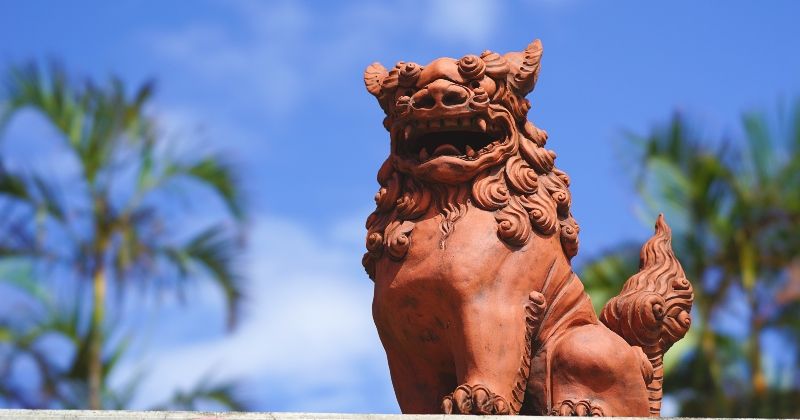
🟠 What is a Shisa?
Shisa are traditional guardian statues found throughout Okinawa.
They look like a mix between a lion and a dog, often placed in pairs at the entrance of homes, buildings, or rooftops to ward off evil spirits and bring good luck.
The name “Shisa” comes from the Okinawan language, derived from the word “shishi” (獅子), which means “lion” in Japanese and Chinese.
🟠 A Brief History of Shisa
📜 Roots in Chinese & Indian Lion Worship
Shisa have origins in ancient lion statues brought to Okinawa from China and India during the 14th century, when Okinawa was known as the Ryukyu Kingdom.
At first, they were used to protect royal palaces and temples.
🏠 Rise of Rooftop Shisa
In the 17th century, local craftsmen in Tsuboya (Naha City) began creating ceramic Shisa statues.
These were placed on rooftops as part of Okinawan folk belief and quickly became a tradition for common households.
🟠 Meaning & Symbolism
Shisa are believed to:
- 🛡️ Protect from evil spirits
- 🍀 Bring good luck and fortune
They are usually placed in pairs, and each has a specific meaning:
| Shisa Type | Mouth | Symbolizes |
|---|---|---|
| Male | Open (shouting “A”) | Inviting good luck |
| Female | Closed (“Un”) | Keeping bad spirits away |
The “A-Un” breathing concept comes from Buddhist tradition and is also found in temple guardian statues in mainland Japan.
🟠 How to Place Your Shisa Properly
| Location | Direction | Purpose |
|---|---|---|
| Gate / Entrance | Facing outward | Block evil from entering |
| Rooftop | Facing inward | Watch over the house |
| Indoors | Facing doors or windows | Keep an eye on incoming energy |
💡 Always place them as a pair, with the male on the right (mouth open) and female on the left (mouth closed) — as if they’re protecting your space together.
🟠 Shisa in Modern Okinawa
Today, Shisa are not only spiritual protectors but also:
- 🎨 Art pieces – Available in colorful, playful styles
- 🧸 Souvenirs – Small versions for tourists and home decor
- 🧭 Feng Shui tools – Used in interior design for energy balance
You can find them everywhere: from shops and cafes to rooftops and even on public buildings.
✅ Final Thoughts
Whether you’re exploring Okinawa or looking to bring home a unique piece of its culture, Shisa offer more than just decoration — they’re a symbol of protection, luck, and centuries-old tradition.
So next time you spot a pair of Shisa statues, take a closer look.
They just might be watching over you. 👀✨

![🏝️ [2025 New Attraction] Junglia Okinawa Opens! What You Need to Know Before You Go](https://en.ecob.okinawa/wp-content/uploads/2025/06/73ef3736-a978-4e88-be54-e5a454d9abad-120x68.jpg "🏝️ [2025 New Attraction] Junglia Okinawa Opens! What You Need to Know Before You Go")
コメント